The Best Kayaks for Big Guys (2026): Apply the 70% Rule Before You Trust Any Number
Kayaks that pass the 70% rule for bigger paddlers: BKC's 550 lb flagship, Perception's 425 lb Outlaw, and the honest arithmetic behind every capacity.
Kayak capacity is the most misleading number in outdoor gear, because the printed figure is not a rating for use, it is the flotation ceiling. At maximum capacity a kayak still floats; it also sits low, wallows, weathercocks, and ships water over the sides. The working convention across the industry, one even manufacturers publish, is the 70% rule: paddler plus paddle, PFD, and everything aboard should total no more than 65 to 70 percent of the printed capacity. That is the same derating logic this site applies to furniture, applied by an industry honest enough to say it out loud.
Run the arithmetic before any shopping: body weight, plus 25 to 40 lb of real-world gear, divided by 0.7. A 250 lb paddler needs roughly 400 lb of printed capacity; a 300 lb paddler needs about 470. Most recreational kayaks print 250 to 325, which is why this page exists and why it is short. Every capacity below comes from the listing or the manufacturer’s spec sheet, checked 2026-09-11, and the specs table converts each one to its practical band so the ranking cannot oversell you. One scope note: inflatable kayaks are a genuinely different product with their own physics and will get their own page rather than a few rows here.
The specs, verified, with the 70% rule applied
| Kayak | Printed capacity | ~Practical (70%) | Honest fit |
|---|---|---|---|
| BKC 11.5 Pro | 550 lb | ~385 lb | 300+ lb paddlers, geared |
| Perception Outlaw 11.5 | 425 lb | ~297 lb | Mid-200s, full fishing load |
| Pelican Catch Mode 110 | 375 lb | ~262 lb | 220-250, solo launching |
| Perception Tribe 11.5 | 350 lb | ~245 lb | Low 200s, recreation |
| Pelican Catch Classic 100 | 350 lb | ~245 lb | Low 200s, budget fishing |
Water is the unforgiving version of the usual physics
On land, exceeding a rating fails slowly; on water the margin you spent is the freeboard between the deck and the lake. Loading matters as much as the total: weight centered and low keeps the hull trim, while a cooler strapped high in the stern turns chop into water aboard. Boarding is the dynamic moment, the same sit-down spike every chair on this site accounts for, which is one more argument for the sit-on-top decks ranked here: when a boarding goes wrong, you slide off a deck instead of pumping out a cockpit. Buy the band above your arithmetic, not the one it barely fits.
How we rate
Every pick is scored on the same five criteria, and every weight rating is sourced from the manufacturer’s current listing or spec sheet at write time, never guessed. When a rating is a marketing claim rather than a certified test, we say so.
Verified capacity
The manufacturer’s published weight rating, checked against the current listing or spec sheet, with the test standard (BIFMA, ANSI, EN) named when one exists and called a claim when one does not.
Comfort at size
How it feels for a bigger body: padding density, armrest span, recline behavior, and whether owners near the rating say it holds without creaking or flexing.
Build & durability
Frame material and gauge where published, hardware and weld points, and how it holds up over months of use near the rated load, from long-term owner reports.
Fit & dimensions
Seat width and depth, width between arms, and height range: whether the dimensions actually accommodate the people the capacity number invites.
Value & warranty
What you get for the price, weighted by warranty terms. A company that guarantees its rating in writing is telling you something the spec sheet cannot.
Price bands, relative to the picks on this page: $ budget · $$ mid-range · $$$ premium · $$$$ top shelf. Amazon prices move constantly, so we show bands rather than dollar amounts; each button shows the live price.
Best overall, the real 550
BKC Brooklyn 11.5 Pro Sit-on-Top (550 lb)
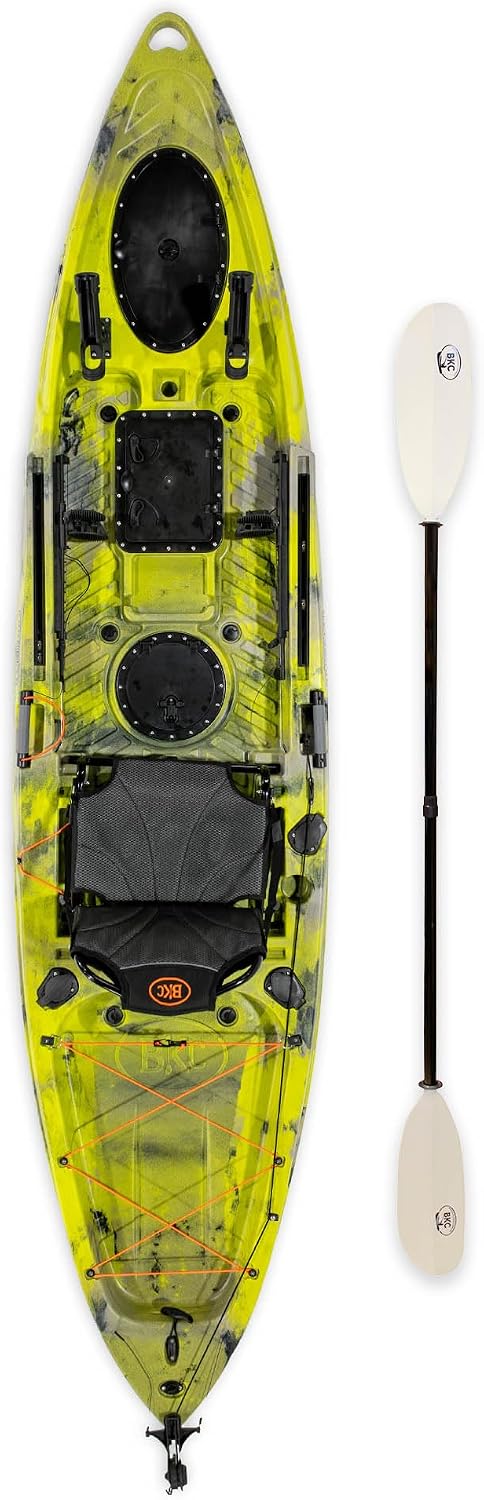
Brooklyn Kayak Company builds the boat this page's arithmetic keeps demanding: a 550 lb capacity printed on the listing and on BKC's own spec sheet, which the 70% rule converts to roughly 385 lb of real paddler-plus-gear service, the only figure here that covers the audience the keyword names. The pro-style hull is stable enough to fish from standing, the seat well runs wide, and a rudder handles the tracking that heavily loaded short boats otherwise lose. The honest caveat is the listing's youth, a few dozen reviews so far on this specific model from a brand that has sold high-capacity boats for years; we rank it on the manufacturer's published spec and say so plainly.
Pros
- 550 lb published capacity, ~385 lb practical under the 70% rule
- Standing-stable fishing hull with rudder steering
- Wide seat well, sit-on-top re-entry
Cons
- Young listing; ranked on BKC's published spec
- Premium price and a heavy hull to car-top
- Overkill for paddlers under ~250 lb
Best proven hull
Perception Outlaw 11.5 (425 lb)
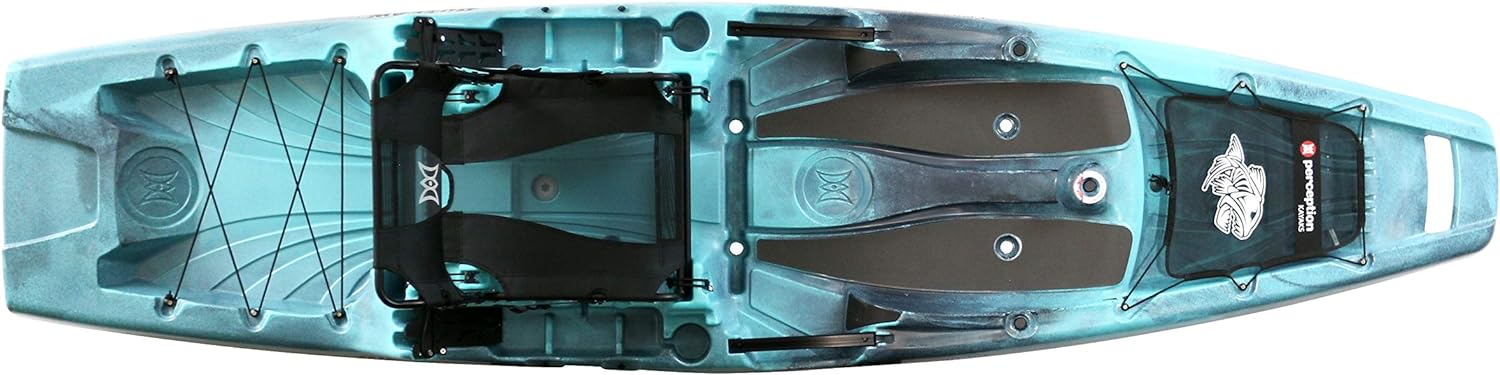
Perception is one of American kayaking's establishment brands, and the Outlaw is its big-water workhorse: a 425 lb capacity stated in the listing, an ultra-open standing deck, and the fold-away lawn-chair seat that owners near the rating single out as the difference on all-day sits. Three hundred reviews make it the deepest record on this page. Run the arithmetic honestly: 425 converts to roughly 297 lb of practical load, an excellent match for paddlers into the mid-200s with full fishing gear, and a stretch past that. Inside its band, it is the most proven boat here.
Pros
- 425 lb capacity from an establishment brand
- Deepest review record on the page
- Lawn-chair seat, standing-ready deck
Cons
- ~297 lb practical: know your band
- The page's highest price
- 78 lb hull wants a cart or a second person
Lightest to load
Pelican Catch Mode 110 (375 lb)
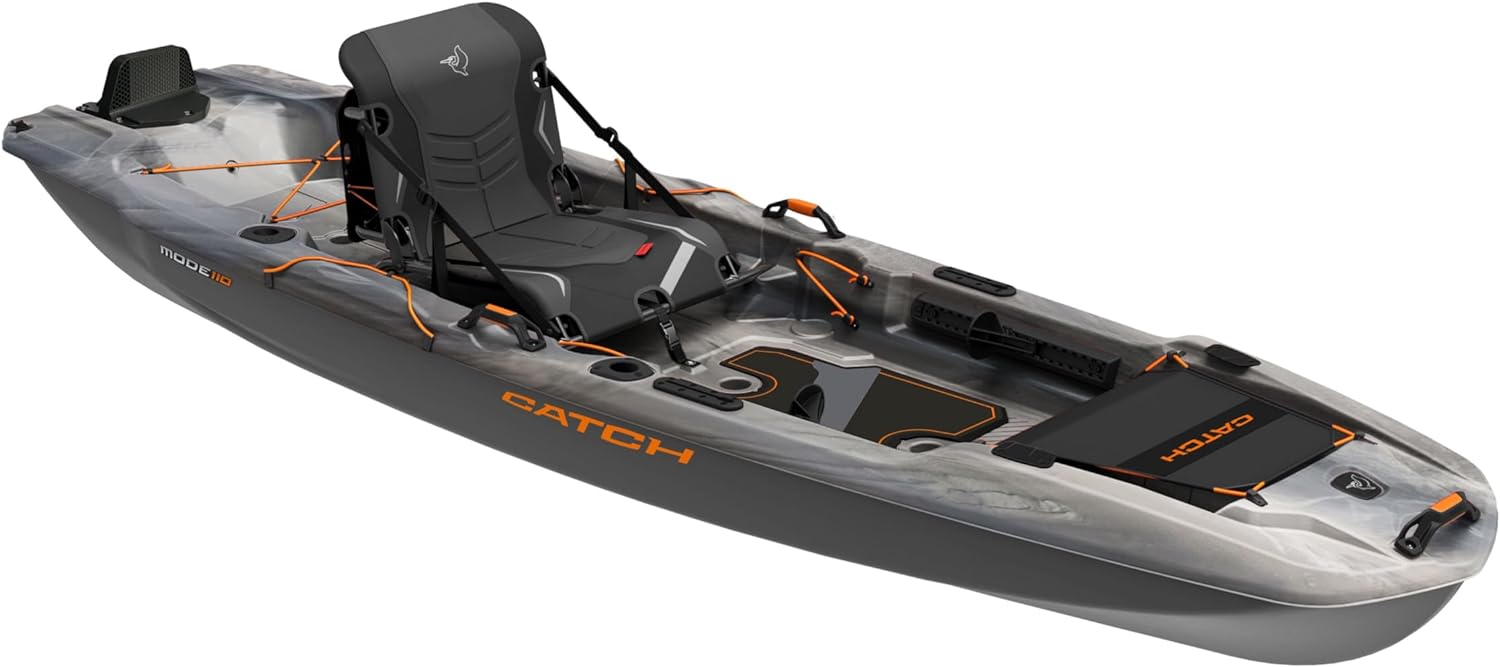
Pelican's Catch Mode 110 solves the problem the big hulls above create: getting the boat itself to the water. Its twin-hull RAM-X construction holds a 375 lb stated capacity, roughly 262 lb practical, while the kayak weighs dramatically less than the Outlaw class, the difference between car-topping alone and not going. The lawn-chair seat matches the premium boats, the pontoon-style hull is confidence itself at rest, and a hundred and sixty reviews back the package. For paddlers in the 220 to 250 band who launch solo, this is the pick that actually gets used.
Pros
- 375 lb capacity on a light, solo-manageable hull
- Very stable twin-tunnel hull design
- Elevated lawnchair-style seat
Cons
- ~262 lb practical load; not the 300 lb answer
- Slower hull shape than the fishing flagships
- 10.5 ft tracks loosely in wind without care
Best all-around 350
Perception Tribe 11.5 (350 lb)
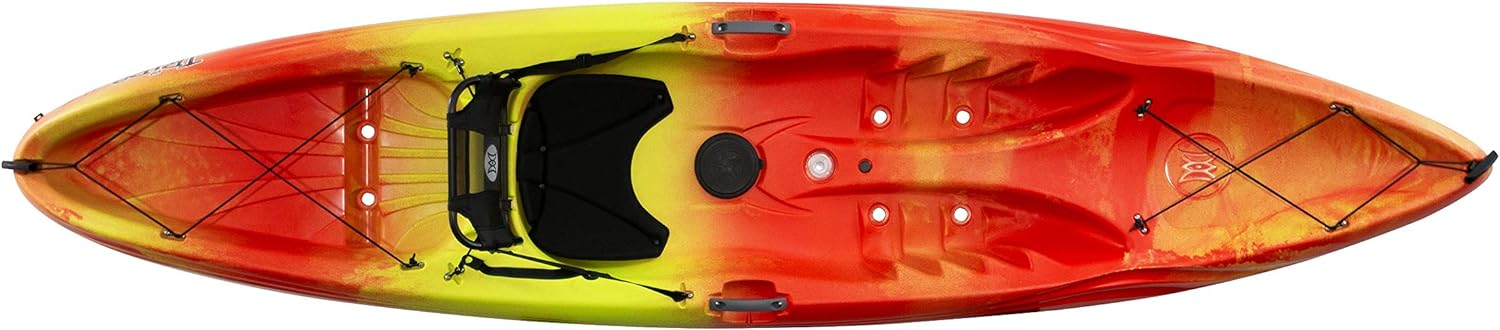
The Tribe is the recreational half of Perception's lineup done at honest scale: a 350 lb maximum stated in the listing, a wide, deep sit-on-top deck without the fishing hardware, and the brand's molding quality at a friendlier price than the Outlaw. A hundred-plus reviews and years on the market back it. The band is the whole story: 350 converts to about 245 lb practical, which serves paddlers in the low 200s with a day's gear and margin. For that paddler wanting a versatile boat rather than a fishing platform, it is the easy call; past that weight, shop the top half of this page.
Pros
- 350 lb capacity from a major brand
- Comfortable open deck, easy re-entry
- Meaningfully cheaper than the fishing hulls
Cons
- ~245 lb practical: the entry band of this page
- No rudder; loaded tracking takes technique
- Basic seat next to the lawn-chair class
Budget 350
Pelican Catch Classic 100 Angler (350 lb)
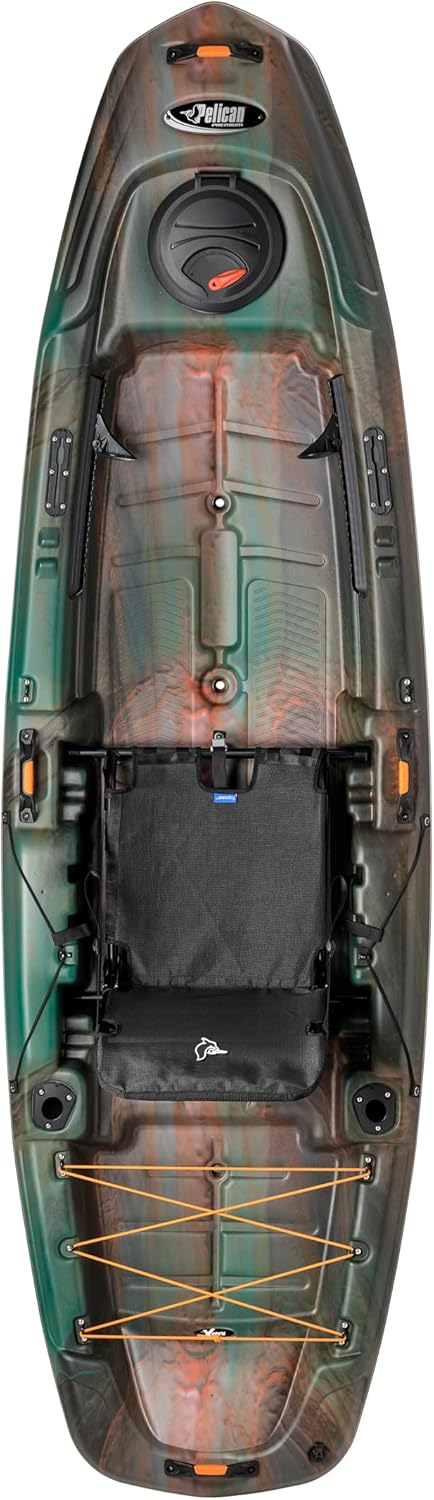
The Catch Classic 100 is the cheapest honest entry to this page: a 350 lb stated capacity, Pelican's dual-position Ergocast seat, and a compact ten-foot fishing layout at a price hundreds under everything above. A hundred and thirty reviews at 4.2 make it the page's most modest record and score, with complaints running to accessories rather than hulls. Same band arithmetic as the Tribe, about 245 lb practical, so it is a boat for the low-200s paddler, chosen over the Tribe when the budget or the rod holders decide. It closes the list where value pages should close: cheap, honest, and clearly labeled.
Pros
- 350 lb capacity at the page's lowest price
- Dual-position fishing seat, rod holders
- Short hull stores and hauls easily
Cons
- Lowest owner score of the ranked five
- ~245 lb practical, same band as the Tribe
- Ten feet is short for bigger water
Also worth considering
Strong, well-reviewed products that just missed our ranked list - worth a look if the picks above aren't quite right for you.
- BKC Brooklyn 11.0 Sit-on-Top (420 lb) - BKC's 420 lb all-rounder at a lighter 58 lb hull weight; a 4.8 average on a listing still too young to rank, and the natural runner-up once its record fills in.
Frequently asked questions
What is the best kayak for a big guy?
The BKC Brooklyn 11.5 Pro, on arithmetic: its 550 lb printed capacity is the only one in this class whose practical limit, roughly 385 lb under the 70% rule, genuinely serves paddlers over 300 lb with gear aboard. Everything else ranked here serves specific weight bands, which the specs table converts honestly.
What does a kayak's weight capacity actually mean?
It is the flotation ceiling, not a performance number: at the printed maximum the boat still floats, sitting low, slow to respond, and one wave from swimming. Paddlers and manufacturers alike work to the 70% rule, keeping paddler plus paddle, PFD, and gear at about 65 to 70 percent of the printed figure for the boat to paddle the way it was designed to.
How much capacity do I need for my weight?
Add roughly 25 to 40 lb of gear to your body weight and divide by 0.7. A 250 lb paddler with 30 lb aboard needs about 400 lb of printed capacity; at 300 lb of paddler the arithmetic demands roughly 470, which is why the 550 class exists and why most recreational kayaks, rated 250 to 325, are the wrong boats for this page's readers.
Are sit-on-top kayaks better for bigger paddlers?
Generally yes, for reasons beyond capacity: an open deck is far easier to board and re-board from water, seat wells are wider than enclosed cockpits, and scupper holes drain what a swamped cockpit would hold. Every kayak ranked here is a sit-on-top, and the wide fishing hulls carry the bonus of standing stability.